


|
June 26, 2014 10:00 PM by |
A man, a plan, a civic mural. Plus, more authors.From Liverpool, we're back in the U.S. for the next puzzle in the Year of Puzzles. Travel to Oceanside in Southern California for some time on the beach and a giant puzzle of pictures on the side of a building, by Eric Harshbarger, a mathematician, computer engineer, lego artist, and puzzle constructor. All you have to do is identify the pictures and put them in the right order.
Of course, it's never quite that simple. Coming Up in the Year of Puzzles After this puzzle, we've got lots more great stuff coming up ... we'll have puzzles by Puzzlemaster Will Shortz (New York Times Crossword Editor), Mike Shenk (Crossword Editor for the Wall Street Journal), Ken Jennings (you might have seen him on Jeopardy!), and Mike Selinker (creator and author of The Maze of Games), not necessarily in that order. The eighteenth puzzle, in September, will be a cryptic crossword by Joshua Kosman and Henri Picciotto (constructors of The Nation cryptic). And then there are the meta puzzles. But first ... But, first, there's Oceanside. Open up the Puzzazz app to solve Oceanside, 4:30 PM. If you're solving offline, visit http://www.puzzazz.com/yearofpuzzles as always to download the PDF file. If you're enjoying the Year of Puzzles, tell your friends. It isn't too late for them to get started. And, if you don't yet own the Year of Puzzles, you can buy it in the Puzzazz app or on our web site. |
 |

|
|
 
|
|
Puzzazz Blog


|
May 27, 2014 2:50 PM by |
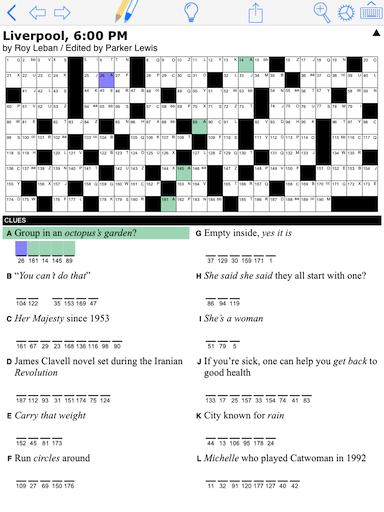
Eight Days a Week (... in the Year of Puzzles)Sometimes, it seems like we work eight days a week here at Puzzazz. That's the life of a startup company, when you're working hard to build a great product and deliver great experiences to users. As CEO, I get to do about twenty jobs, including taking out the trash. But, just because we're working hard, it doesn't mean we're not also having fun. And some of the fun I get to have sometimes is making puzzles, including the latest installment of the Year of Puzzles, set in Liverpool and sort of about The Beatles.
This puzzle was inspired by a puzzle by Mike Selinker that I had the pleasure of editing. It's the last puzzle in Mike's Killer Cryptics puzzle ebook and it wraps up the book with a nice tribute to Stephen Sondheim, who is credited with bringing cryptic crosswords to the US from England. Mike's puzzle nicely weaves the names of a variety of Sondheim's musicals and songs into the clues. So, when I saw that Liverpool was one of the cities that our intrepid puzzle solver was going to visit, I jumped at the opportunity to do something similar for The Beatles, one of my all-time favorite groups. It turned out to be quite a challenge, but I think it ended up very nicely. This puzzle also had an editor, Parker Lewis, who really helped tighten the puzzle up and get rid of some problems I didn't even know I had. Thanks, Parker! I hope you enjoy solving this as much as I did making it. |
|
May 26, 2014 9:30 AM by |
Cryptics - All Stars and more
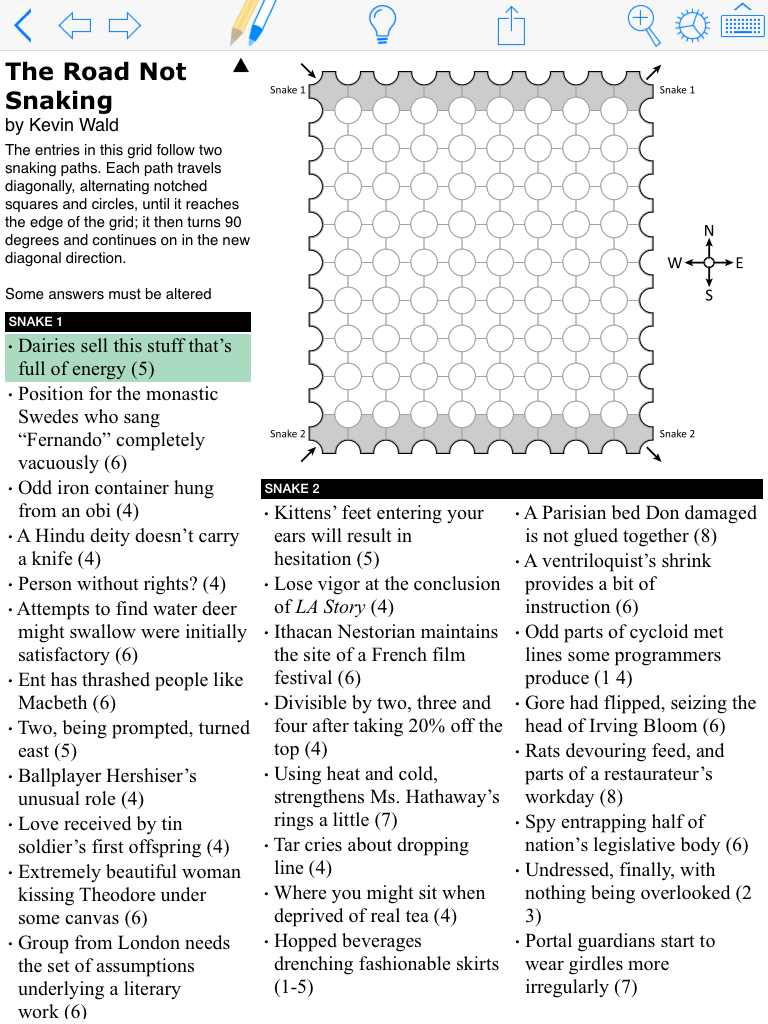
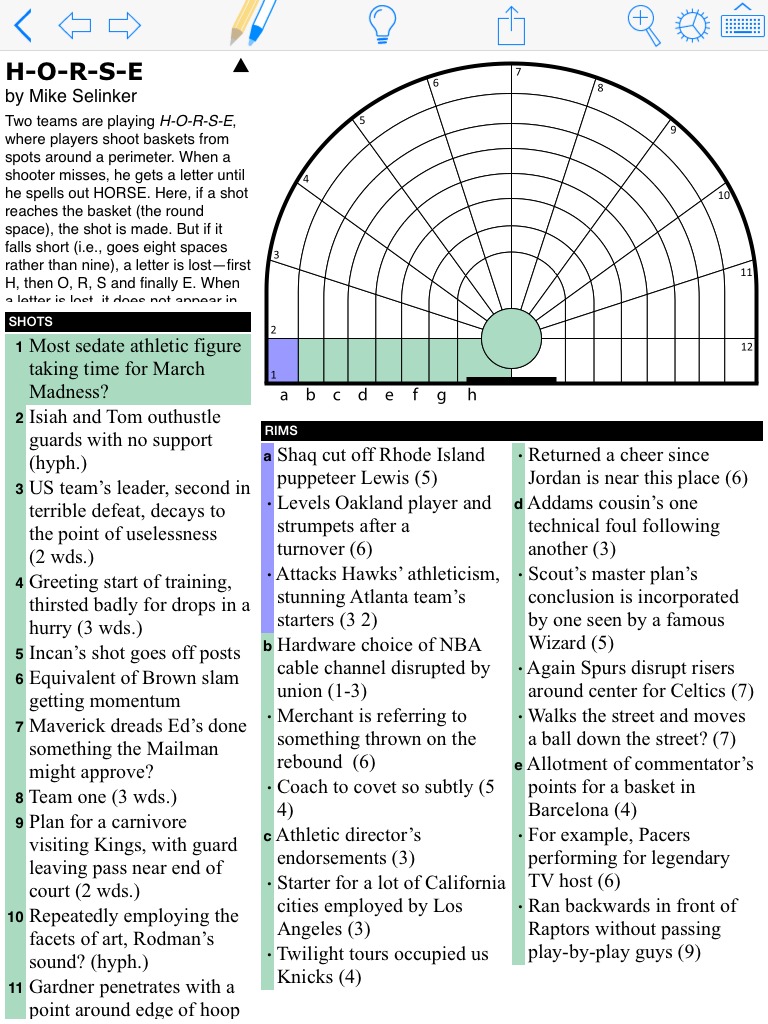
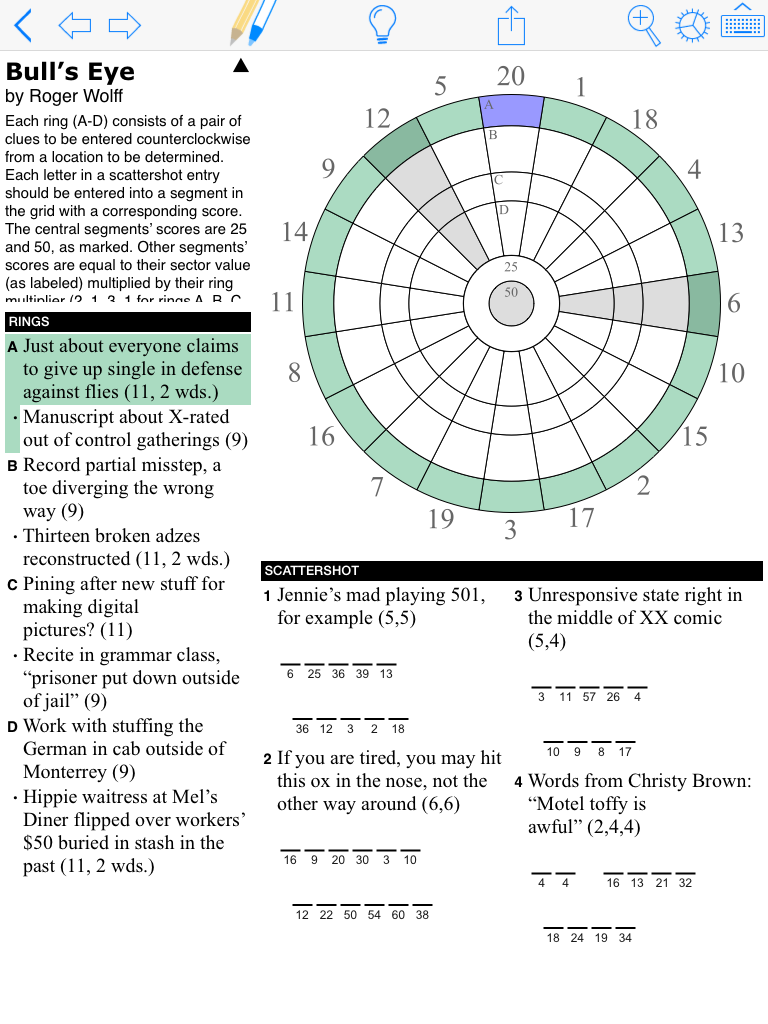
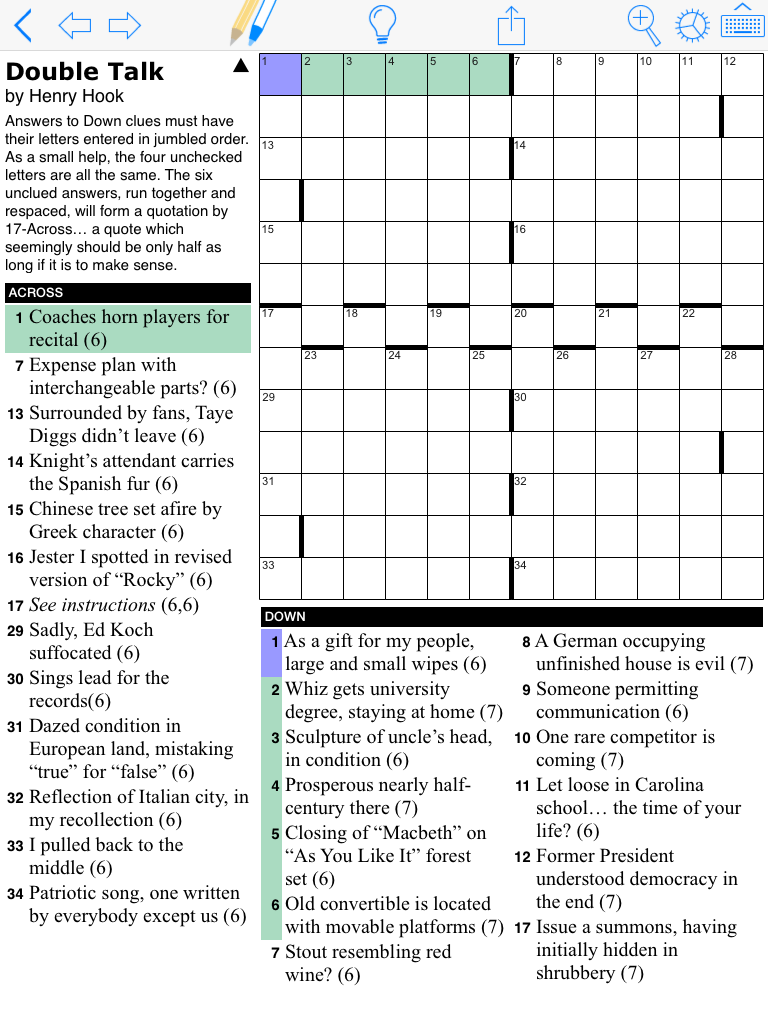
Variety cryptics are known for their tricks and twists, and Cryptic All-Stars is no exception. The Cryptic All-Stars ebook takes full advantage of Puzzazz's exclusive full-fidelity interface, as well as our award-winning TouchWrite™ handwriting recognition, giving you a fantastic solving experience. We think you'll agree with us that it's one of the most amazing ebooks ever produced. Here are a few screen snapshots to give you a quick look at some of the great puzzles you'll find.
Cryptic All-Stars was created by Roger Wolff (through a Kickstarter campaign) and edited by Bob Stigger, it contains 45 excellent variety cryptic puzzles by some of the best cryptic authors in the business, including Puzzazz's own Roy Leban. Other authors include both Roger and Bob, plus David Dickerson, Hayley Gold, Henry Hook, John Forbes, Joshua Kosman, Kevin Wald, Mark L. Gottlieb, Mark Halpin, Mike Selinker, and Todd Rew.
Enjoy! |
 We are extremely pleased to announce the release of two new ebooks of cryptic crosswords.
First up is Cryptic All-Stars, an incredible, stunning ebook full of variety cryptics.
We are extremely pleased to announce the release of two new ebooks of cryptic crosswords.
First up is Cryptic All-Stars, an incredible, stunning ebook full of variety cryptics.
 We also just launched Out of Left Field #3, our third collection of cryptic crosswords by
Joshua Kosman and Henri Picciotto from The Nation. If you like traditional cryptic crosswords,
we can highly recommend Joshua and Henri's extremely solid puzzles.
We also just launched Out of Left Field #3, our third collection of cryptic crosswords by
Joshua Kosman and Henri Picciotto from The Nation. If you like traditional cryptic crosswords,
we can highly recommend Joshua and Henri's extremely solid puzzles.
|
March 31, 2014 5:25 PM by |
April in Australia, a time for puzzlesIt's April! It's Australia! What a great combination for the next puzzle in our Year of Puzzles. We've been warned that there are downsides to trying to do serious things on the very first day of April, but we're going to just take our chances on this one. We hope you won't mind. For this puzzle, we asked Richard Garfield to put together some lists of fun things. Richard is best known as the inventor of the games Magic: The Gathering and RoboRally, but that's just the tip of the iceberg. Richard recently co-wrote the fantastic book Characteristics of Games, one of the few books that focuses on what actually makes games of all types fun. If you want to create games, the book is highly recommended. Plus, he also loves and creates fun puzzles.To top things off, we've arranged for a special, surprise editor to make sure nothing will go wrong. So, look at Richard's lists, discover what's extra, and you'll have it all figured out. That's all there is to it. We think. Maybe. We hope. Hey, wait a minute ... . . . To solve, open up the Puzzazz app and check out 1:30 AM, Canberra. If you're solving offline, visit http://www.puzzazz.com/yearofpuzzles as always to download the PDF file. If you're enjoying the Year of Puzzles, it's never too late to tell your friends. If you don't yet own the Year of Puzzles, you can buy it in the Puzzazz app or on our web site. |
|
March 22, 2014 9:30 AM by |
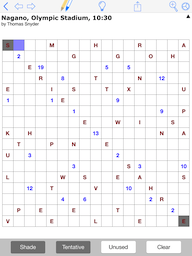
The First Logic Puzzle of SpringWhat would spring be without a logic puzzle? To celebrate the changing of the seasons, the Year of Puzzles presents a fun and unique Nurikabe Path puzzle by Thomas Snyder aka Dr. Sudoku.
Thomas is a three-time World Sudoku Champion and six-time US Puzzle Champion, but he's not just a solver -- he also creates fantastic logic puzzles, and he's come up with this clever variant on Nurikabe logic puzzles. Thomas is also the founder of Grandmaster Puzzles, which specializes in hand-crafted logic puzzles. To solve, open up the Puzzazz app and check out Nagano, Olympic Stadium, 10:30. If you're solving offline, visit http://www.puzzazz.com/yearofpuzzles as always to download the PDF file. If you're enjoying the Year of Puzzles, it's never too late to tell your friends. If you don't yet own the Year of Puzzles, you can buy it in the Puzzazz app or on our web site. |
|
March 17, 2014 9:30 AM by |
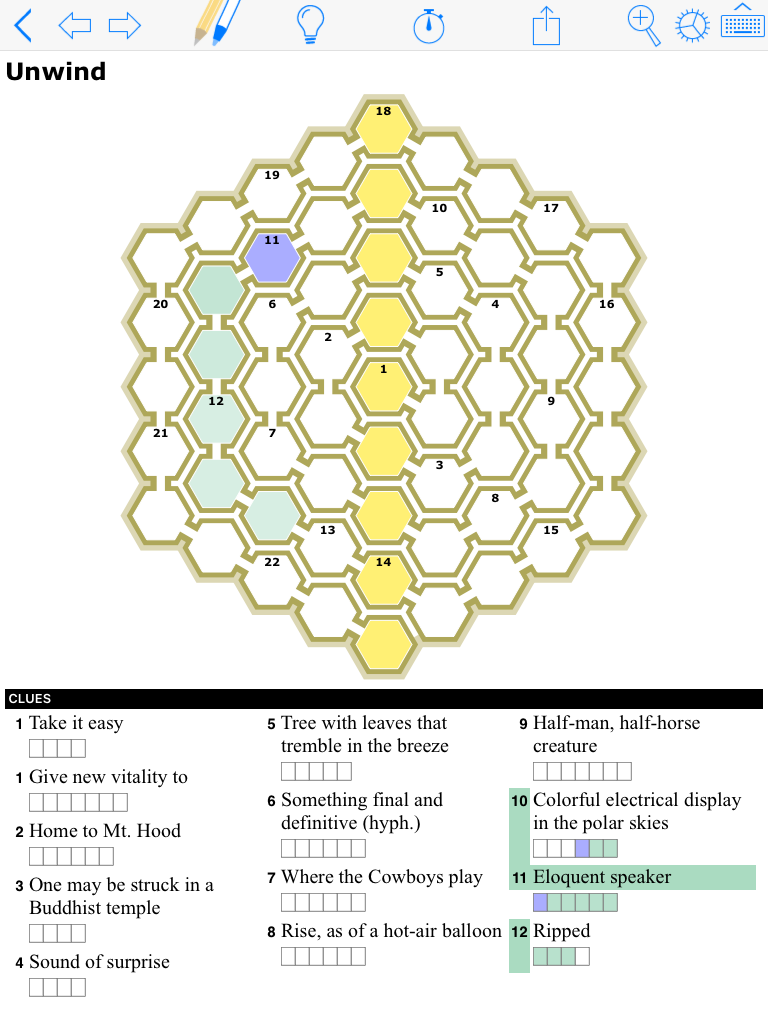
Our Fiftieth Puzzle Book!We've just launched our 50th puzzle book, an incredible and ingenious book by Mike Shenk and the folks at Puzzability. Puzzability's Variety Show is full of great variety puzzles to satisfy any puzzle craving you might have.
We've been honored to work with Puzzability on this groundbreaking book, which features many puzzle types never before seen on any digital device. You'll find words that snake around the grid and intersect in unexpected ways. In some cases you'll have to figure out where words go or which directions they go in. For all of them, you'll have Puzzazz's first class interface, including TouchWrite and flexible hinting. Here's just one small example of what you'll find in Puzzability's Variety Show:
Browse through the book on your iPad, iPhone, or iPod Touch and we think you'll love what you see. |
|
December 30, 2013 9:27 PM by |
Live Puzzle Event on New Year's DayWorried you'll be bored on New Year's day with only six bowl games to watch? Or are you trying to figure out a way to avoid them all? Either way, we've got a solution for you, a live puzzle event on the Internet, where you can get a custom puzzle created just for you. On New Year's Day, from 11:00 AM - 5:00 PM Pacific Time, Puzzazz is doing something special — a live puzzle construction event. Simply put, we're going to create custom puzzles for anybody who wants one in real time, with people contacting us through Facebook and Twitter. You'll be able to ask us for a puzzle with a specific answer (subject to approval) and we'll make a puzzle just for you. Puzzles will vary in type and style, depending on subject and how many requests we get. Plus, we'll have a few guest constructors. We'll post full details on New Year's Eve, at http://www.puzzazz.com/puzzles-live. |
|
December 23, 2013 1:11 AM by |
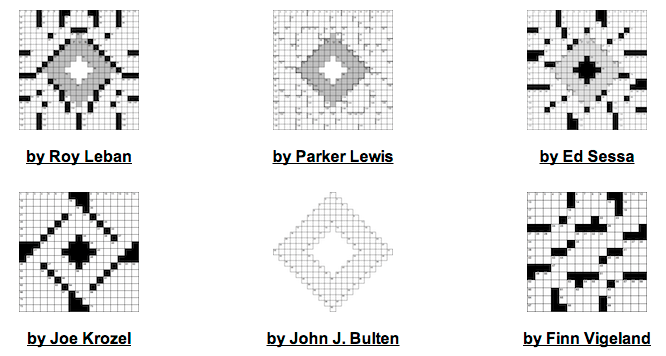
One Hundred (More) Years of Crossword PuzzlesSaturday, the big news yesterday was the 100th anniversary of the first crossword puzzle by Arthur Wynne; today, the big news is the future of puzzles for the next 100 years. Looking back, we just released the Crossword Centenary Compendium, otherwise known as the definitive roundup of puzzles, articles, videos, and more from the Crossword's 100th anniversary.
Looking forward, we're increasing our lead in providing the best way to solve puzzles in the digital world (we're still the only app, on any digital platform, where you can solve the print edition of the daily NYT crossword), and we've just released a wonderful book of Connect-the-Dots Crosswords from Elizabeth C. Gorski.
The Crossword Centenary Compendium We've posted a few anniversary puzzles on our site by permission of the authors. In the puzzles by Roy Leban and Parker Lewis of Puzzazz, plus those by Ed Sessa and Joe Krozel, you'll see four very different takes on the same idea, and check out the New York Times December 21st puzzle by Todd Gross and David Steinberg for another take (if you have a Premium Crosswords subscription from the NYT, you can solve their puzzle in Puzzazz by clicking here). We've also posted puzzles by John J. Bulten and Finn Vigeland, plus we have links to plenty of other anniversary puzzles. There's an amazing number of links to articles, videos, and interviews, and information on some great centennial books. And, oh yeah, a poem by Matt Jones of Jonesin' Crosswords. Elizabeth C. Gorski's Connect-the-Dots Crosswords is a fun collection of 10 new Sunday-size crosswords with an extra element, a connect-the-dots puzzle after you've filled it in. See if you can guess what it is before you reveal it. And, if that's not quite enough, you'll find the connecting lines float above the grid just a little bit for a really nice effect. You'll find Connect-the-Dots Crosswords in the Featured Books section in Puzzazz. Happy Holidays! We'll be marking the New Year with a few more books and the next installment in our Year of Puzzles. Hope your holidays are good ones. |
|
October 07, 2013 3:30 PM by |
Burning the BookshelfI’m happy to say we’ve released a major upgrade to Puzzazz today, a new release designed to fit in perfectly with iOS 7. The highlights include a new look, improved performance, and more ways to find puzzles. Even the icon has been updated, and I think the new icon is a perfect synthesis between the Puzzazz aesthetic and Apple’s new design philosophy. 
Download the free Puzzazz app from the App Store Since the beginning, Puzzazz’s puzzle solving experience has been, literally, all about the puzzles. When you were solving a puzzle, the screen was filled with a clean view of the puzzle and nothing else -- no fake torn paper edges, snippets of unreadable articles from a fake newspaper, or a keyboard that looked like an old typewriter. In short, nothing to distract you from the puzzle itself. Our customers have loved it. In redesigning for iOS 7, we’ve gone all in -- we've taken the beautiful, content-first design of our puzzle-solving experience and extended it to the rest of the app, making it easier and more natural to use. As we've been saying around the office, we tossed the wooden bookshelf on the bonfire. The new browsing interface fits iOS 7 perfectly while also working well on iOS 5 and 6. While we've streamlined browsing, giving you quicker access to your content, and more ways to find it, including improved author pages, the essence of what has made our customers happy hasn't changed. Puzzazz is still the only app available, on any platform, which provides a full fidelity solving experience for New York Times Premium Crosswords subscribers, presenting the print version of the puzzle every day without losing any elements of the puzzle, and at no additional charge. For some Times crossword puzzles, we can even deliver an experience that goes beyond what you find in print (solve the October 1st Times crossword for a great example). Our exclusive, award-winning TouchWrite™ handwriting recognition technology further enhances the experience, particularly on the smaller screen of the iPhone. And Puzzazz is loaded with features designed with solvers in mind, including clue highlighting and auto scrolling, intelligent cross-reference highlighting, clue notes, cell marking, full support for lefties, and multiple options for hinting. All in all, it's a fantastic update to the premier app for your puzzle fix. We hope you like it as much as we do. Read the press release here. |
|
August 28, 2013 7:30 PM by |
imagine this!It's another day and we've got another type of puzzle. But this one's different. There isn't just one answer. In fact, there isn't even an answer yet! It's up to you. Once a week, we'll post something enigmatic. Some lines or something. It'll be up to all of you to suggest what it might be. A closeup? A bird's eye view? A giant ... ? We'll pick our favorite from your suggestions and post a complete drawing next week. Here's the first imagine this! on Facebook and on Pinterest. We're looking forward to seeing all your imaginative ideas. Let us know what you think and, of course, please share with your friends. We'll be posting all our new puzzle types on both our Facebook page and our Pinterest boards. Like us on Facebook and/or follow us on Pinterest so you don't miss any.
Have fun! |
|
August 28, 2013 9:00 AM by |
Cryptically speakingOn Monday, we started running EyeCon puzzles on Facebook and Pinterest. On Tuesday, we started a second new puzzle type -- cryptic clue puzzles. If you already solve cryptic crosswords, you know what they are. These are individual cryptic clues that you can solve on their own. If you don't solve cryptic crosswords, you're missing out. It's our hope that this gentle introduction will pique your interest. We've got a great guide to solving cryptic crosswords built into the Puzzazz app, written by Puzzazz Founder Roy Leban and puzzle guru Mike Selinker. We've also released it the guide for free on our web site. Check it out. Here's the first Cryptic Clue puzzle on Facebook and on Pinterest. We hope you enjoy them all. Add your comments, like them if you've figured them out, challenge your friends by sharing them, and let us know what you think. We'll be posting the EyeCon and Cryptic Clue puzzles and more to come on both our Facebook page and our Pinterest boards. Like us on Facebook and/or follow us on Pinterest so you don't miss any.
|
|
August 26, 2013 7:45 PM by |
Introducing EyeCon PuzzlesWe're introducing a new Puzzazz feature today, EyeCon puzzles, where you have to figure out what something is from a picture. Not just a normal picture, mind you. It's an eyeconic picture, which you'll find is taken from a different angle or position or proximity than you might have expected. Here's the first EyeCon puzzle on Facebook and on Pinterest. Some will be easy. Some will not be so easy. We hope you enjoy them all. Add your comments, like them if you know what they are, share them with your friends, and let us know what you think. We'll be posting them on our Facebook page and on our Pinterest boards. Like us on Facebook and/or follow us on Pinterest so you don't miss any.
|
|
July 10, 2013 7:45 PM by |
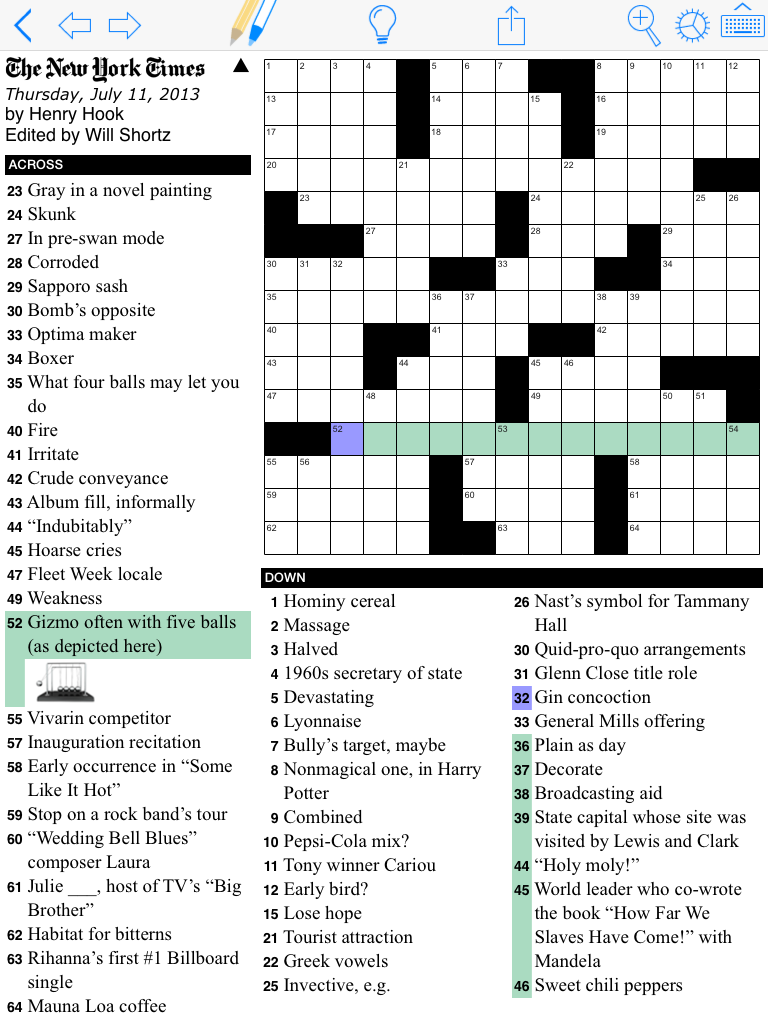
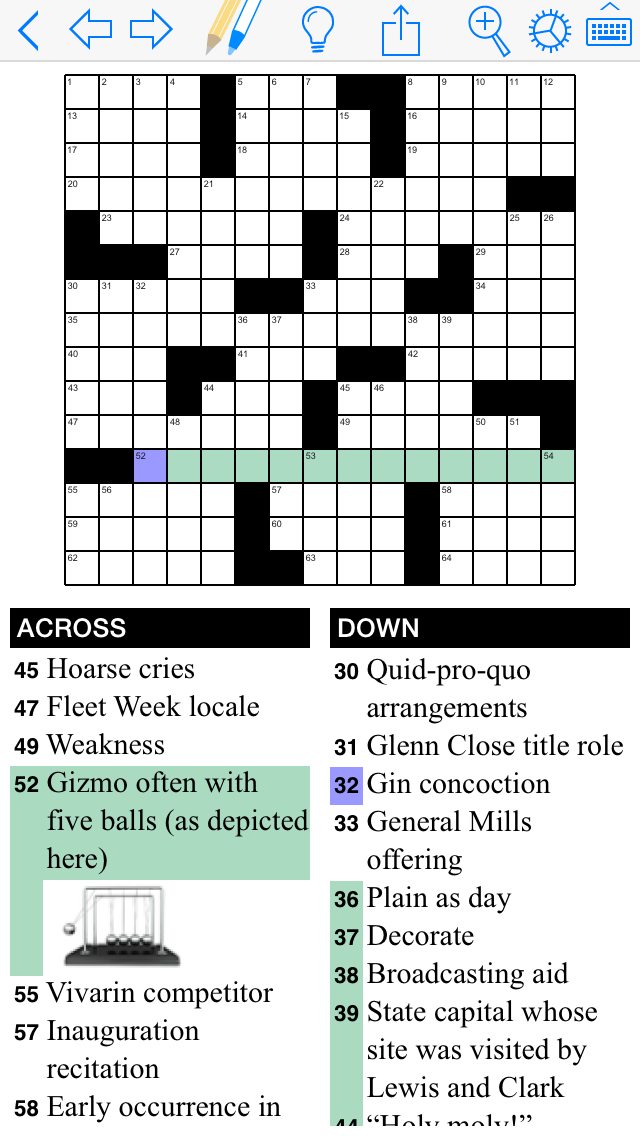
The Full-Fidelity Solving ExperienceOne of the best things about Puzzazz is that it's a full-fidelity puzzle solving experience. When we say this, we mean that there's nothing missing from the puzzles -- what you get is as good or better than what you get when you solve on paper, both in the puzzle and in how we let you solve. We've talked a lot about the latter half with our TouchWrite handwriting recognition and all of the other puzzle-friendly and puzzle-focused features. The July 10th New York Times puzzle (shown below on iPad and iPhone) is a great opportunity to talk about the other aspect -- the puzzle itself. I'll let Jim Horne, the guy behind the great XWord Info site and former blogger for the New York Times official WordPlay blog, set the stage: "TouchWrite is cool but the best news here is that Puzzazz can handle all those strange and wonderful puzzle variations. As more and more fans solve electronically, Will and the other editors face a dilemma. Every time a new non-standard variation appears, the blogs fill up with heated comments from frustrated users who feel ripped off, but editors don’t want to limit the endless creativity that free-form paper-solving allows. Puzzazz goes a long way to making everyone happy." In an unusual move, the variation in today's NYT crossword comes in the clues, not in the grid (click on a picture to see a full screen snapshot):
I don't know about you, but I love innovations and twists as both a constructor and a solver. We've come a long way from the early days of crosswords (almost 100 years ago!) where every clue was a simple, straight definition. I'm not sure what made Will Shortz decide to include a picture in one of the clues of this puzzle, but I know it's fun. Everybody here at Puzzazz is proud to support whatever zigs and zags Will and his fellow editors are going to throw at us. Enjoy! |
|
July 04, 2013 12:30 AM by |
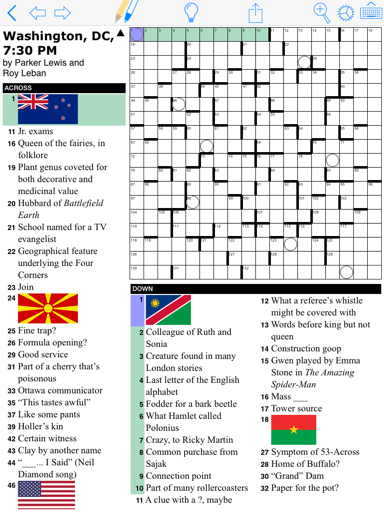
Happy Independence Day!Two-hundred and Thirty Seven Years ago today, the United States Declaration of Independence was adopted. Zero days ago today, Puzzazz released the first holiday puzzle in the Year of Puzzles, commemorating this fact with a special flag-themed puzzle set in Washington, DC.
If you're solving in the Puzzazz app, just open the Year of Puzzles and the puzzle will be waiting for you. Note: You must have Puzzazz 2.5 or higher and you must be connected to the Internet for the puzzle to receive the update. Once the puzzle has updated, you don't need to stay connected to solve the puzzle. If you're solving on paper, head on over to the Year of Puzzles page and download the latest PDF file. Some administrivia: The launch of our support for the New York Times Crossword in Puzzazz caused a delay in the Year of Puzzles. We'll be catching up with two more puzzles in July. |
|
June 25, 2013 10:00 AM by |
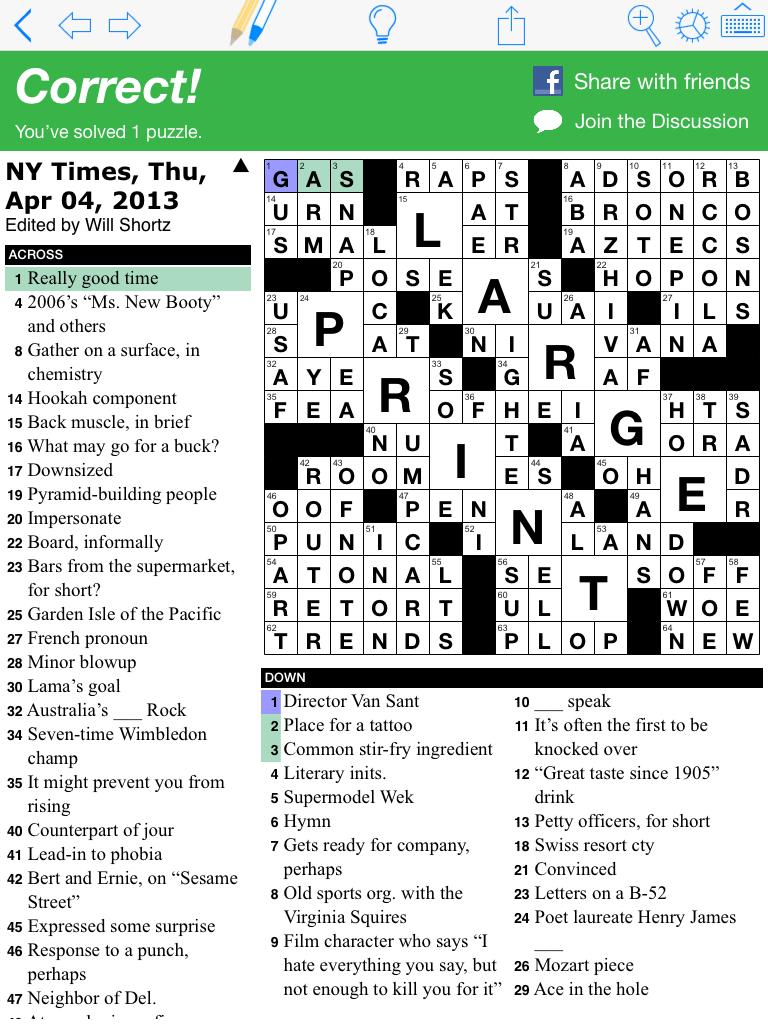
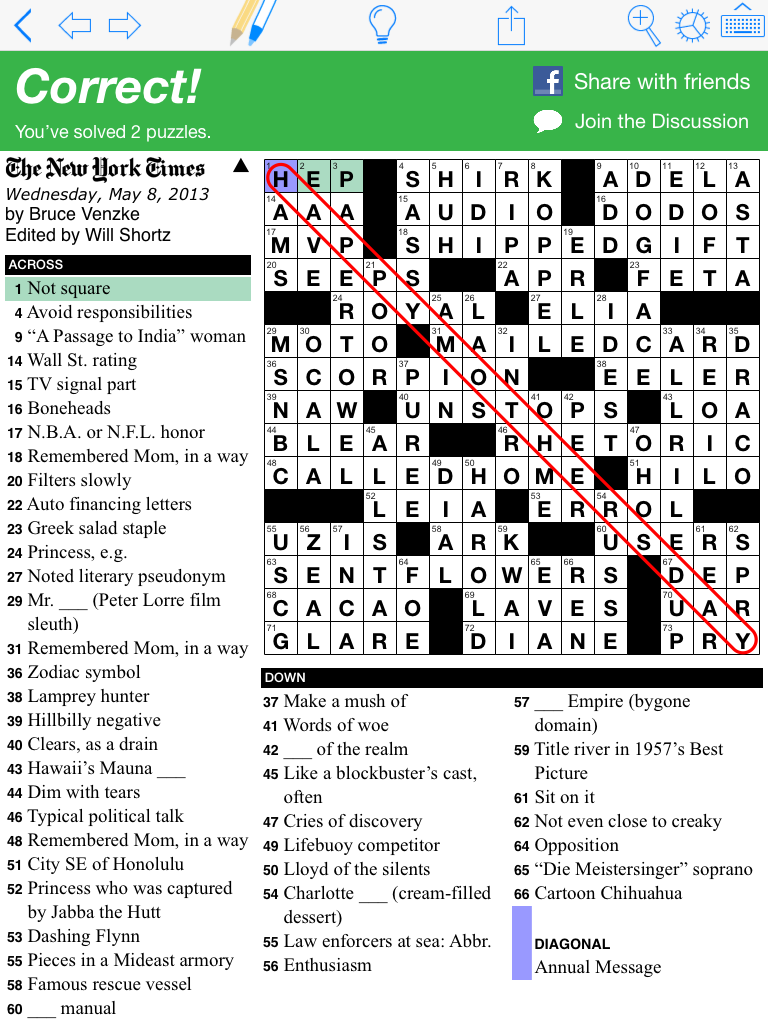
Solving the New York Times CrosswordWe're excited! And we have been virtually chomping at the bit to tell you about this: the New York Times daily crossword puzzle can now be solved in Puzzazz, at no additional charge for NYT premium crosswords subscribers. Not only can you use Puzzazz's phenomenal user interface and award-winning TouchWrite handwriting recognition technology, but you'll also get a full-fidelity solving experience, with puzzles matching the print edition in both formatting and functionality. Only in Puzzazz. A lot of people think of the NYT daily crosswords as the gold standard of puzzles, and we're very happy that you can now solve it in Puzzazz on your iPad, iPhone, or iPod Touch. It has been really enjoyable for us to solve in Puzzazz over the last few weeks as we've been testing, and we know you're going to enjoy it too. When we say it's a "full-fidelity" experience, we mean you get everything you get on paper, with no compromises. But you also get thoughtful features designed with solvers in mind, including clue highlighting and auto scrolling, cross-reference highlighting, clue notes, cell marking, support for lefties, and a number of options for hinting. And, of course, Puzzazz is the only app with our exclusive, award-winning TouchWrite handwriting recognition technology, which requires no training or special letters, and makes solving more enjoyable (particularly on small-screen devices like an iPhone). Here's some screen snapshots of some recent NYT crosswords, which give you an idea or what you'll see in Puzzazz on both iPad and iPhone. (click on any picture to see a larger snapshot)
We're providing all this at no additional charge to New York Times Premium Crosswords subscribers. We believe that people shouldn't be charged twice to solve the puzzles. All NYT subscribers have to do is enter their nytimes.com login information and puzzles will be downloaded automatically each day right after they're released by the Times. Click here to download the free Puzzazz app. And if you've already downloaded it, we would appreciate a 5-star rating and review. Thanks! |
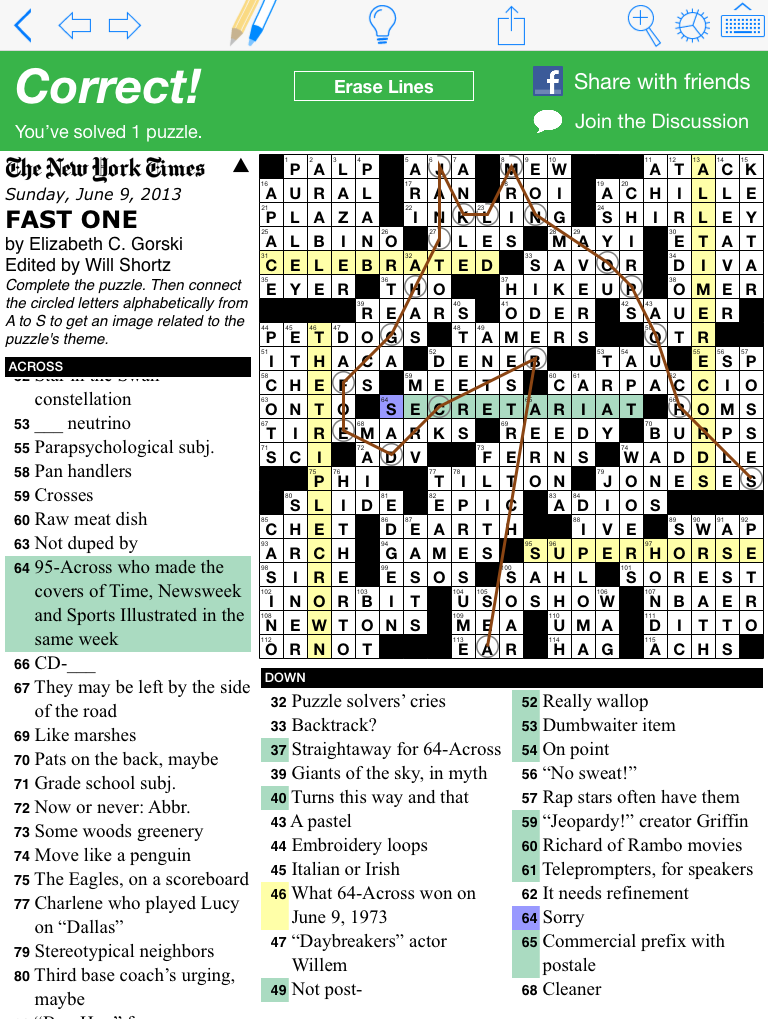
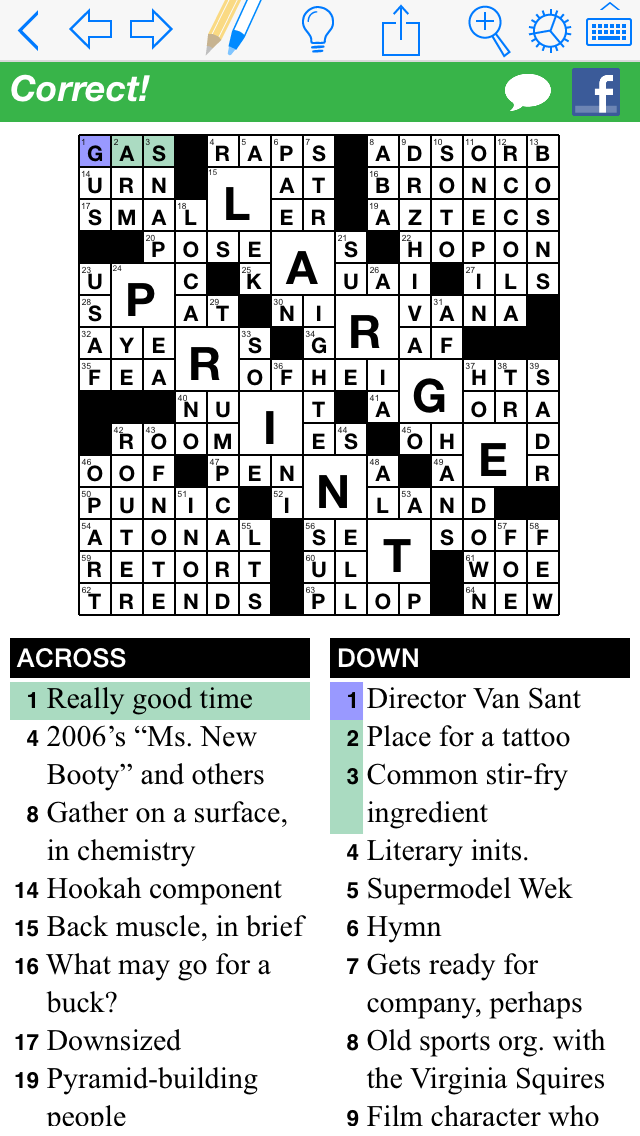
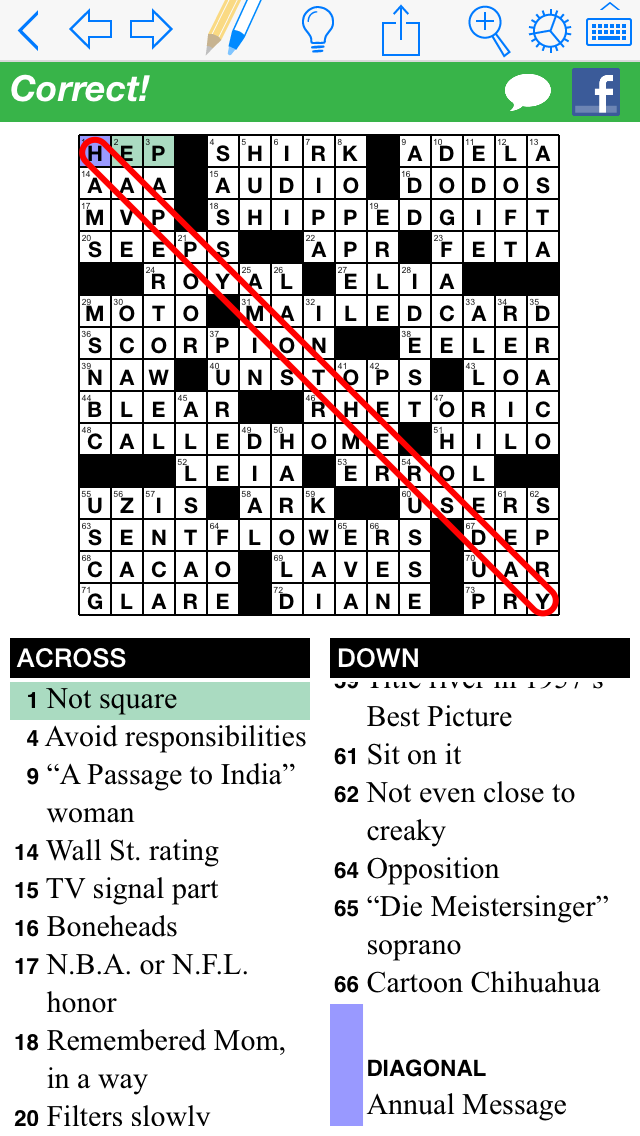
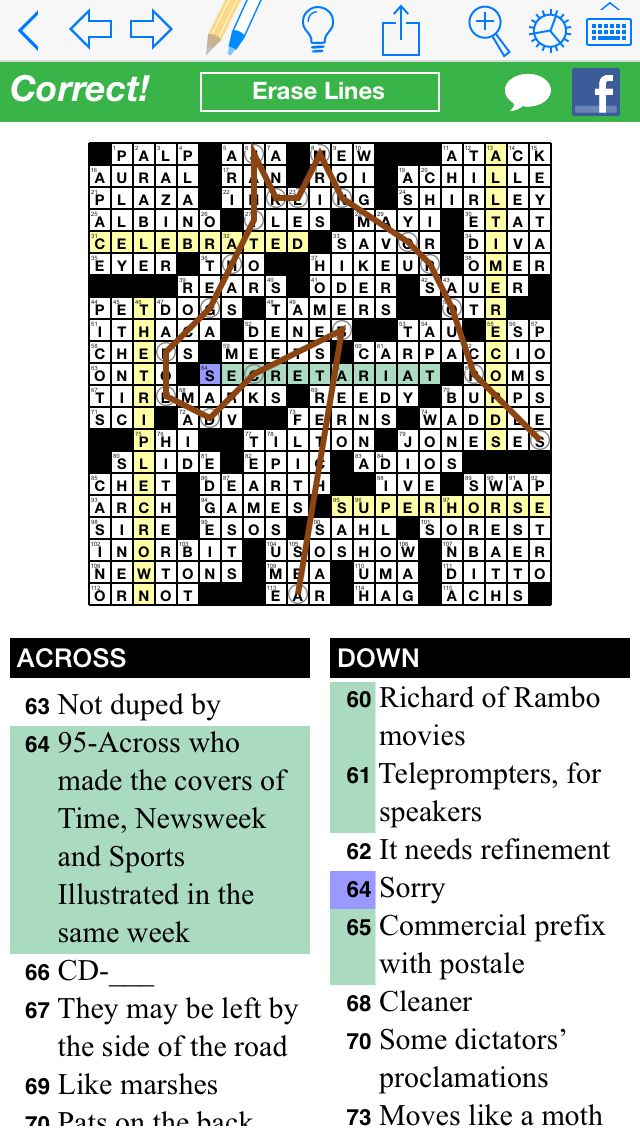
|
May 21, 2013 8:32 AM by |
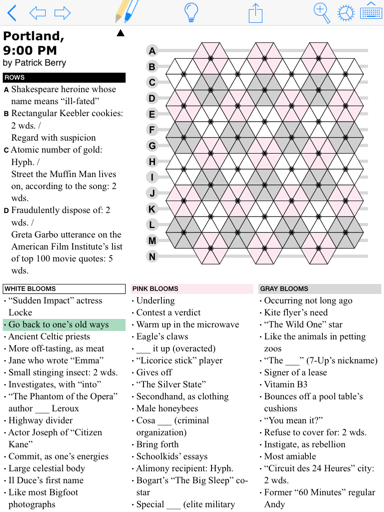
Portland's Rows GardenWelcome to Portland! It's the second stop in the Year of Puzzles, our year-long puzzlehunt filled with great puzzles by world-class authors. In honor of the City of Roses, the puzzle is a Rows Garden, a fun puzzle of interlocking Rows and Blooms invented by Patrick Berry, who crafted this one.
The story of the Year of Puzzles, written by Emily Dietrich continues as well. Don't expect to learn too much about the mysterious figures behind your journey just yet, though all will be revealed in time. The Rows Garden highlights some features unique to the Puzzazz app. Not only is Puzzazz the only app that lets you solve unusual puzzles like the Rows Garden and the previous double spiral puzzle, but unique features like clue notes and cell marking, and, of course, TouchWrite™ handwriting recognition, make solving them as fun as they are on paper. Enjoy! |
|
May 10, 2013 7:55 PM by |
TouchWrite is the Innovation of the YearWe are very pleased to report that Puzzazz won GeekWire's 2013 Innovation of the Year award for our TouchWrite handwriting technology. Winning the award is great validation that we're doing things right. 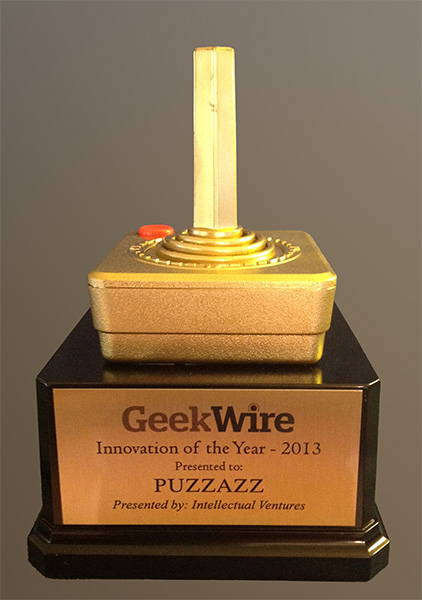
Todd Bishop, GeekWire co-founder, said "TouchWrite is an awesome technology. Literally, they brought handwriting recognition technology to iOS. It's a really deserving award." The unique award trophy looks very nice on the fireplace mantle in our office (our office is in an old house, so, yes, we have a fireplace). Celebrating done, the team is already back to work and super excited about our upcoming releases. Check out GeekWire's awards wrapup for complete information, and, while you're at it, enjoy the fun intro video they used at the event. |
|
April 29, 2013 11:15 AM by |
Innovation of the YearWe've been working hard to build the best way to buy and solve puzzles in the digital world, and we're proud to tell you that our TouchWrite handwriting recognition technology has been nominated for the GeekWire Innovation of the Year award. We'd greatly appreciate your vote. Over the last few years, we've spent a lot of time looking hard at how people solve puzzles and we've crafted our user experience around what we've learned. We like to say that we're not trying to replicate paper, but build an experience that feels as good as paper does, so that solvers are just solving puzzles rather than spending times working around our user interface. Our integrated TouchWrite handwriting recognition technology is an integral part of the experience, particularly on small devices like an iPhone. It feels great to have GeekWire and the Seattle tech community recognize this with this nomination.
If you like what we're doing, we'd appreciate your vote: Thanks! Update May 10th: We won! See here for details. |
|
April 22, 2013 4:00 PM by |
The Year of PuzzlesOne of my favorite things is something called a puzzlehunt, a set of interconnected puzzles which combine to form a larger puzzle. But that’s just the tip of the proverbial iceberg. Puzzlehunts are filled with fun and unique puzzles, designed to challenge you just right to maximize your fun. Today, I’m excited to announce that Puzzazz is launching the Year of Puzzles, a year-long puzzlehunt filled with great puzzles by world-class constructors. Each month during the Year of Puzzles, there will be new and unique puzzle, frequently of a type you’ve never seen before, intertwined with an interesting and surprising story which will unfold over the course of the year. Like every book we sell, the first puzzle is free. It’s a unique double spiral by Parker Lewis. Check it out in the Puzzazz app or, if you prefer to solve on paper, there’s a PDF you can download. You might wonder how the Year of Puzzles fits into Puzzazz’s mission. We’ve already built the best way to buy and solve puzzles in the digital world, through the Puzzazz app available for iPad and iPhone (and other devices in the future). But our larger mission is to build up the world of puzzles in a way that benefits all of us, including puzzle solvers, puzzle authors, and puzzle companies like Puzzazz. We’re doing this by creating the best and easiest to use interface, including our exclusive TouchWrite handwriting recognition technology, and by supporting a huge range of puzzles. Whatever type of puzzles you like to solve, you can find them here. Puzzazz is the only app, on any platform, which supports the kickoff double spiral puzzle or the Rows Garden puzzle by Patrick Berry which will be up next. And you’ll see much more in the coming year. Enjoy! |


|
Our Puzzle Books Buy Gift Certificates
Our World-Class Authors
How to Solve Puzzles
Our exclusive, award-winning TouchWrite™ handwriting recognition
Special features: Puzzles Live 2013 100th Anniversary of the Crossword
Get the puzzle of the day:
 RSS Feed
Read the latest Puzzazz Newsletter
About Us Contact Us Support FAQ Read the Buzz about Puzzazz
Your account Redeem a coupon or special offer
Cookies: If you sign in, we use a cookie for that purpose. We also use cookies to manage your browser session.
If you use third-party services, such as Facebook, with Puzzazz, they may use cookies following their own policies.
© 2026 Puzzazz Privacy Policy